
Understanding market profile day types
Where the time or volume builds, and how the distribution forms, tells us a lot about participants' positioning. The first step to using that is knowing your day types: here are seven, and the characteristics that identify each one.
The idea
Market profile lets us evaluate value as it develops over the day timeframe, the week or other timeframes. Price is shown on the vertical axis against time on the horizontal, and the chart represents price as a frequency distribution. Each unit of time is a 30 min period. If the profile is bell-shaped, fatter at the middle prices, with activity trailing off and volume diminishing at the extreme high and low prices, value is deemed to be at the price where the most time has been spent. This is called the point of control (POC).
The same principles apply in volume profile, only volume, not time, is shown on the horizontal axis. Value is at the price where the most volume has traded, called the volume point of control (VPOC).
Depending on where most of the time or volume has been spent, and how the distribution was built, we can learn a lot about participants' positioning in the context of the current auction.
The first step to using this information to make objective trading decisions is understanding day types. Here are a few, and what they represent.

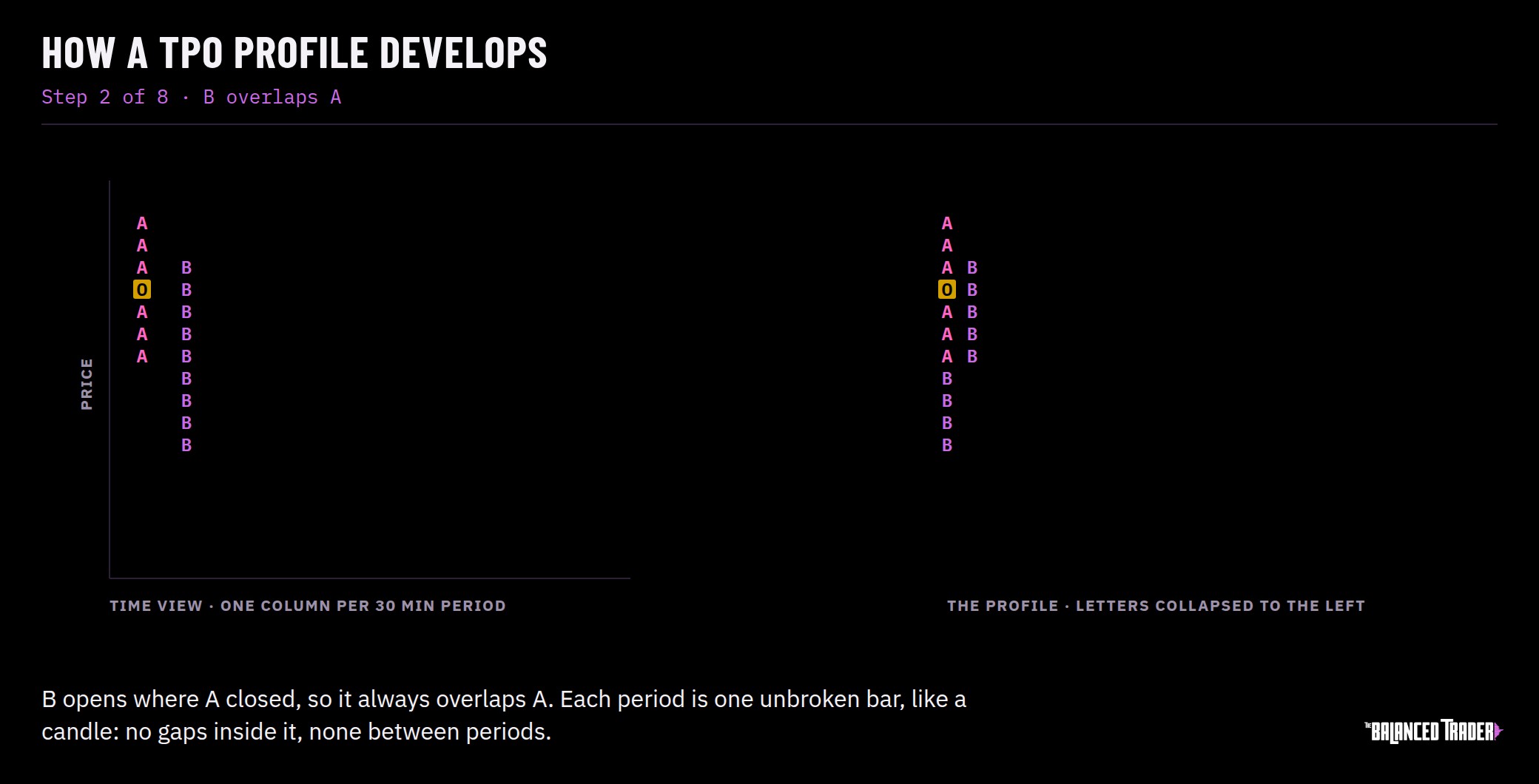

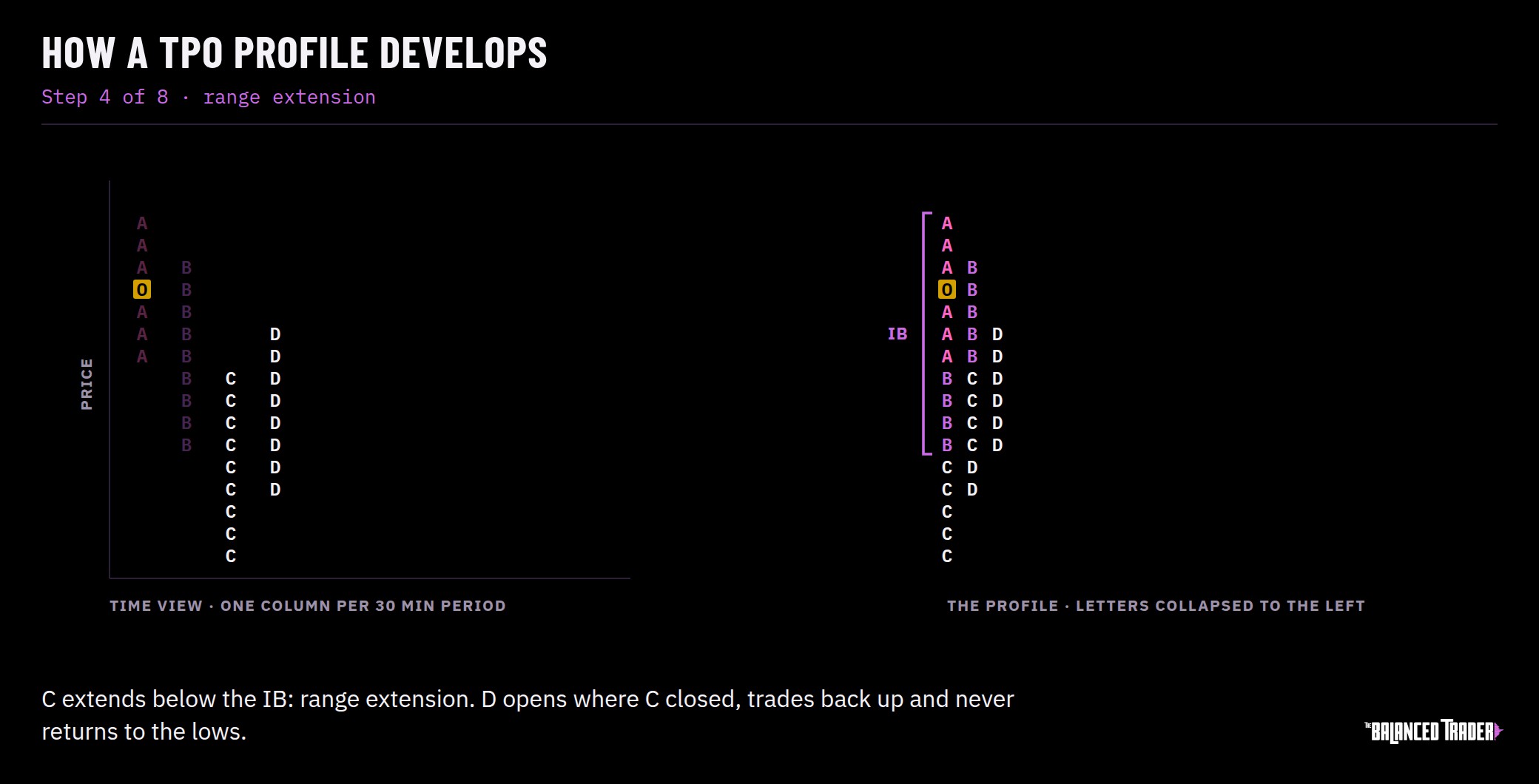

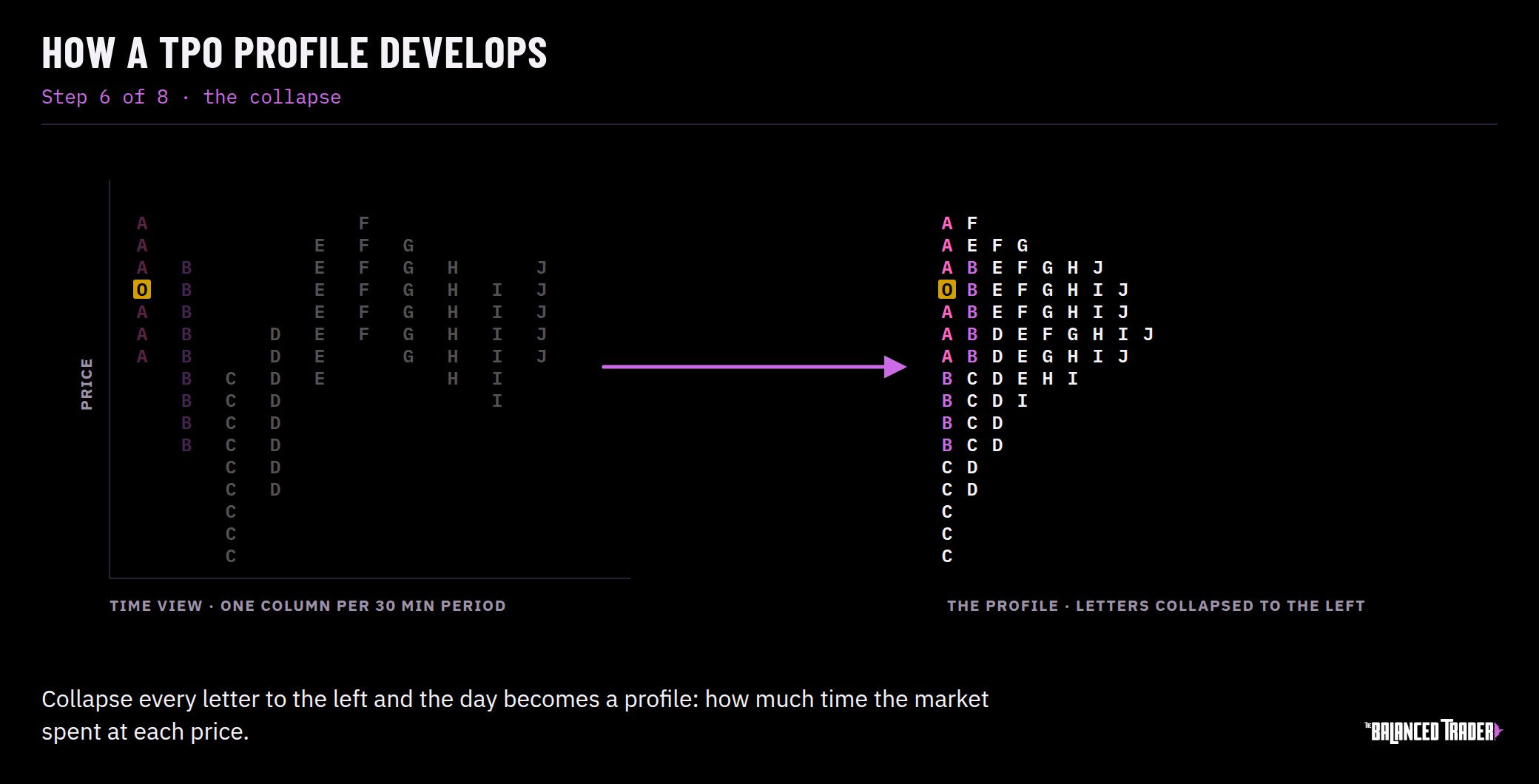


Play it as a video
Normal day
Normal days, despite their name, are not all that common. A normal day happens when the market opens with conviction in one direction, usually because of new information. After the move the market loses confidence and trades basically sideways, or retraces somewhat, for the rest of the day. Essentially, the major players enter early and trade aggressively.
A normal day tends to have these characteristics:
- A wide initial balance.
- The IB high and IB low are both unbroken.
Normal variation day
- A wide IB, usually 50% of the day's range.
- The IB high or IB low is broken.
Neutral day
When both sellers and buyers are particularly active on a given day, it's known as a neutral day. You get significant moves both up and down, breaking both the IB high and the IB low, because both sides are so active. The market usually closes in the middle of the range.
A neutral day has these characteristics:
- The IB high and IB low have both been broken.
- The market closes in the middle of its range (within the IB).
Neutral extreme day
A neutral extreme day is identical to a neutral day, except that the market closes at one extreme. This usually suggests that the traders who bet in the direction of the close won, and we should expect a continuation move in the coming days.
A neutral extreme day has these characteristics:
- A typical initial balance range.
- The IB high and IB low have both been broken.
Double distribution
A double distribution trend day is a less common day type. The day starts off in balance, forming a narrow initial balance. Then traders enter aggressively and drive the market in one direction with little to no counter-trading. There's a clear separation between where activity started and where it ended the session, with no overlap. The market then carries on sideways once it reaches what it considers value.
The characteristics of a double distribution trend day are:
- A narrow initial balance.
- A wide day range.
- A close at the day's range extreme (within 25% of the day's range).
Trend day
When the market perceives a significant change in value, we get a trend day. The market starts to move in one direction and stays that way for the rest of the day, with only modest pull-backs. It closes at or near the extreme of the day's move.
A trend day has these characteristics:
- A large range.
- Little to no reversal of the trend.
- A close at the extreme of the day's range (within 25% of the day's range).
P or b distribution
A p or b distribution tends to typify a short-covering or long-liquidation move. The market closes at or near the extreme of the day's move.
A p or b distribution has these characteristics:
- A large range.
- Little to no reversal of the trend.
- A close at the extreme of the day's range (within 25% of the extreme).
Key takeaways
See it in the journal
Real sessions where this happened, written up on the day.
Get the journal in your inbox
The daily journal, the week reviews and the Weekly Ahead, by email. Subscribers get the pre-market update first.