
TPOs, non-excess extremes and profile ledges
A non-excess high or low can mean continuation or absorption, and the two mean very different things. What TPOs, non-excess extremes and ledges are, how I tell the setups apart, and how I trade them: a ledge is a dam that either holds or breaks.
The idea
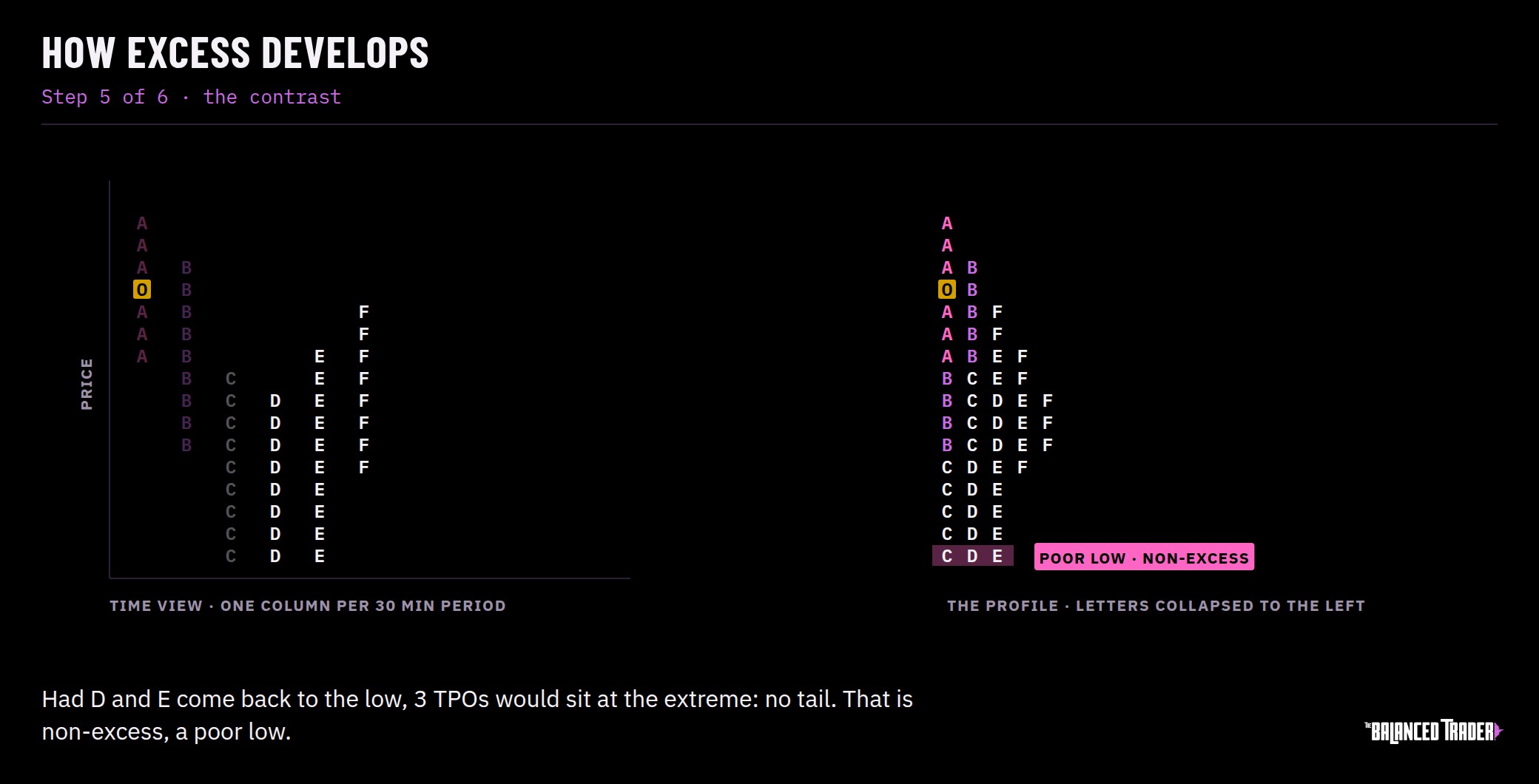
What is a TPO?On a market profile chart, a TPO is a graphical representation of a unit of time, usually 30 minutes. Each price traded during a 30 min TPO unit is printed, building a histogram-style picture of the day's trading activity.
As each letter (TPO, or block) is printed against the price axis and the letters begin to overlap, a distribution takes shape, forming the market profile. Areas that have traded the most form an HVN (high volume node), and areas where price has been rejected create an LVN (low volume node) in the distribution.
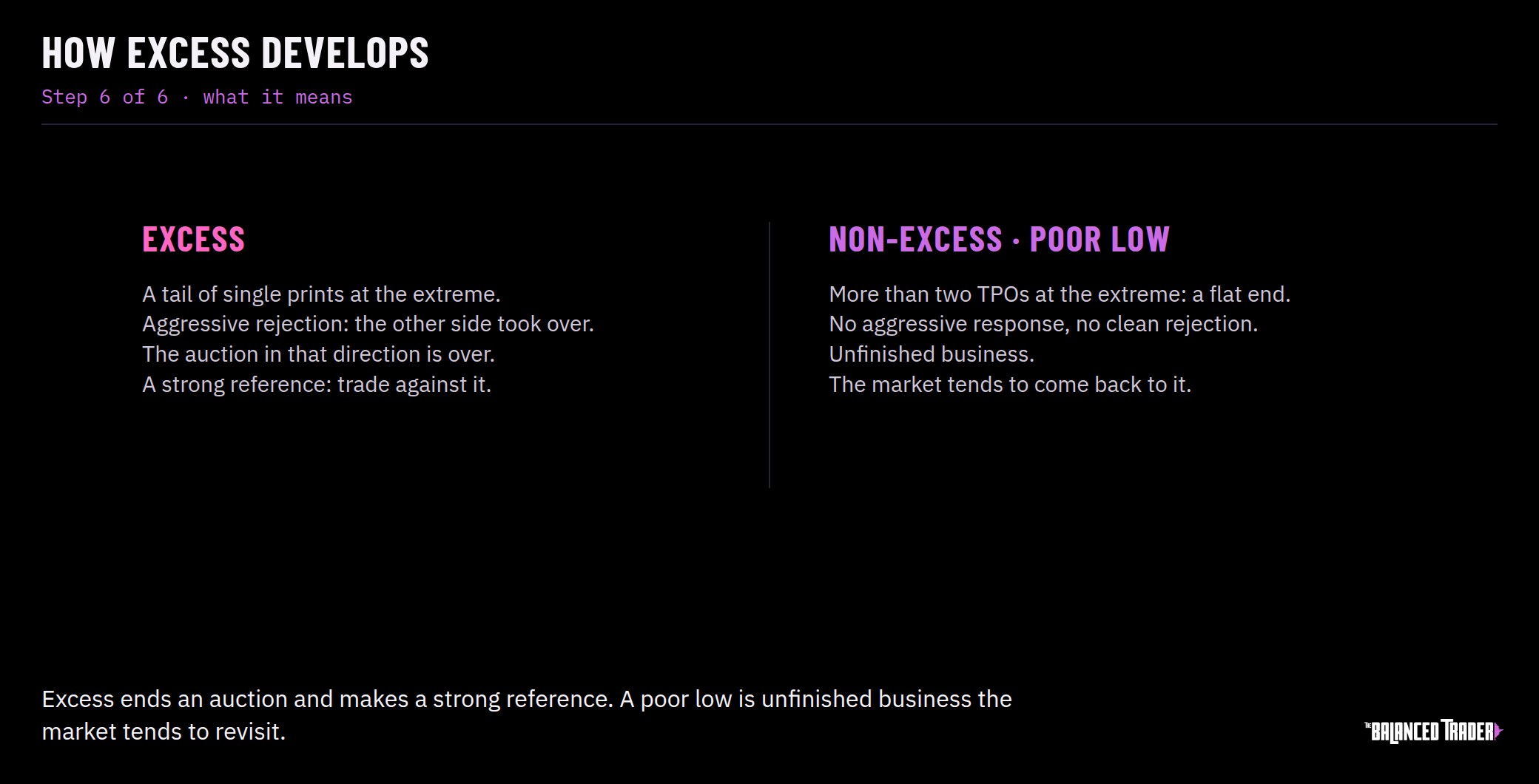
Non-excess highs and lowsNon-excess (NonXS) extremes are the extremes of the day's trading range where more than 2 TPOs have formed. They show that price spent a long time in that area, which suggests participants may be interested in continuing their activity at those levels or beyond. In slower market regimes, a NonXS high or low may instead show a lack of willingness among buyers or sellers to trade further, or a passive participant willing to absorb the liquidity provided by the opposing side at those levels.
LedgesA ledge is a graphic representation of where price came to a halt and found support or resistance within the internal distribution of a market profile. The principles for non-excess structure are in essence the same for the ledge. Ledges represent strong support and resistance.
Think of a ledge as a weak dam filling up with water that may eventually break. The more water that presses against the dam, the more the dam needs to be reinforced. If the reinforcement fails, the greater force of water is unleashed. Or the reinforcements hold and the water eventually retreats.
How to spot it
These non-excess setups mean very different things and aren't always simple to identify. Following price action and volume is a good tool in these cases.
Non-excess, continuationCaused by an aggressive auction in either direction that temporarily meets support or resistance (greater liquidity).
Non-excess, absorptionCaused by passive buyers or sellers adding liquidity at a level and maintaining supply.
The key to identifying the setup is understanding:
- HTF location and context.
- Order flow and volume.
LedgesA developed ledge represents an area of price that has been resolutely defended by buyers or sellers.
Not all ledges are equalUnderstanding the market regime is extremely important. As explained above, context and location matter, as does the trading environment.
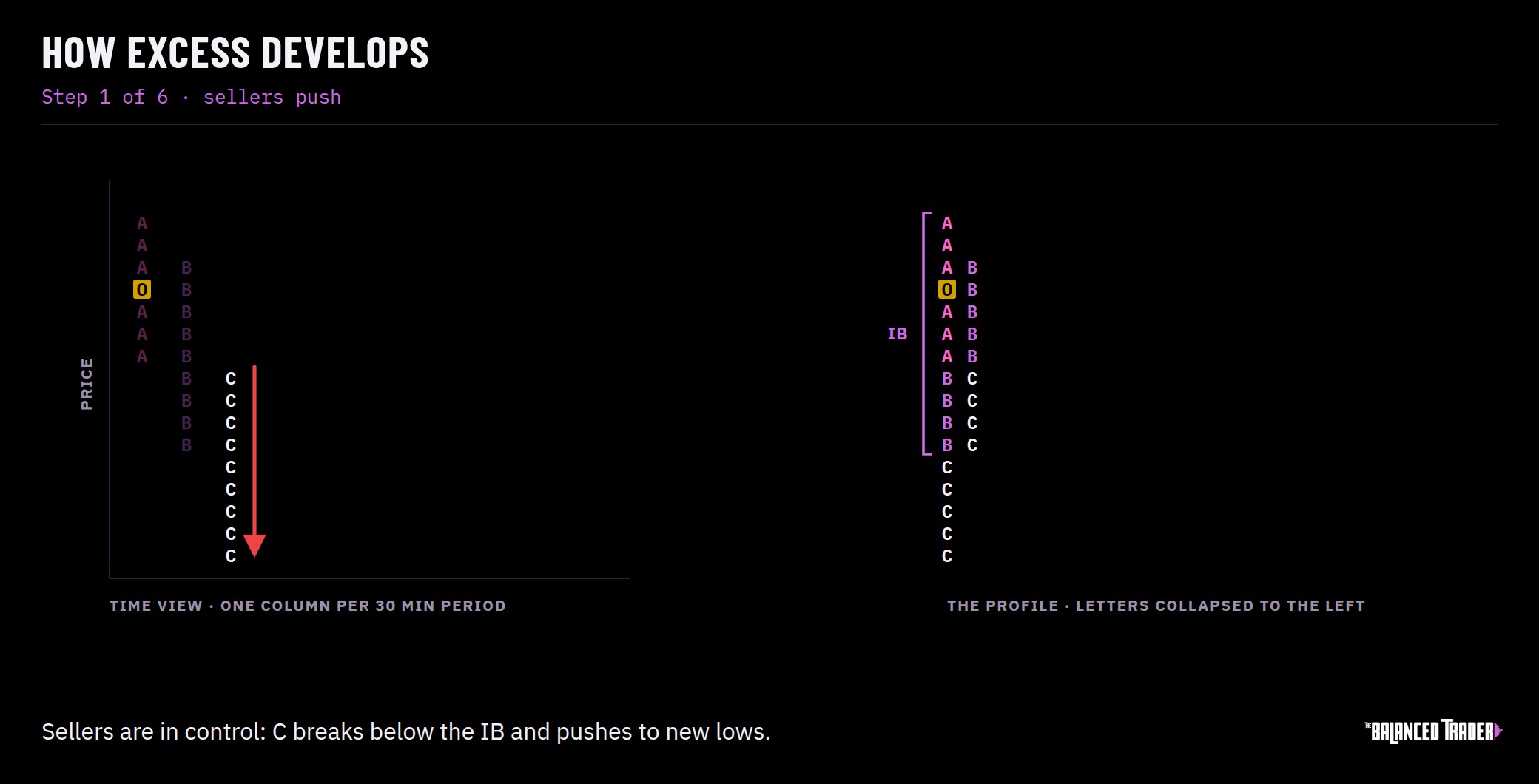
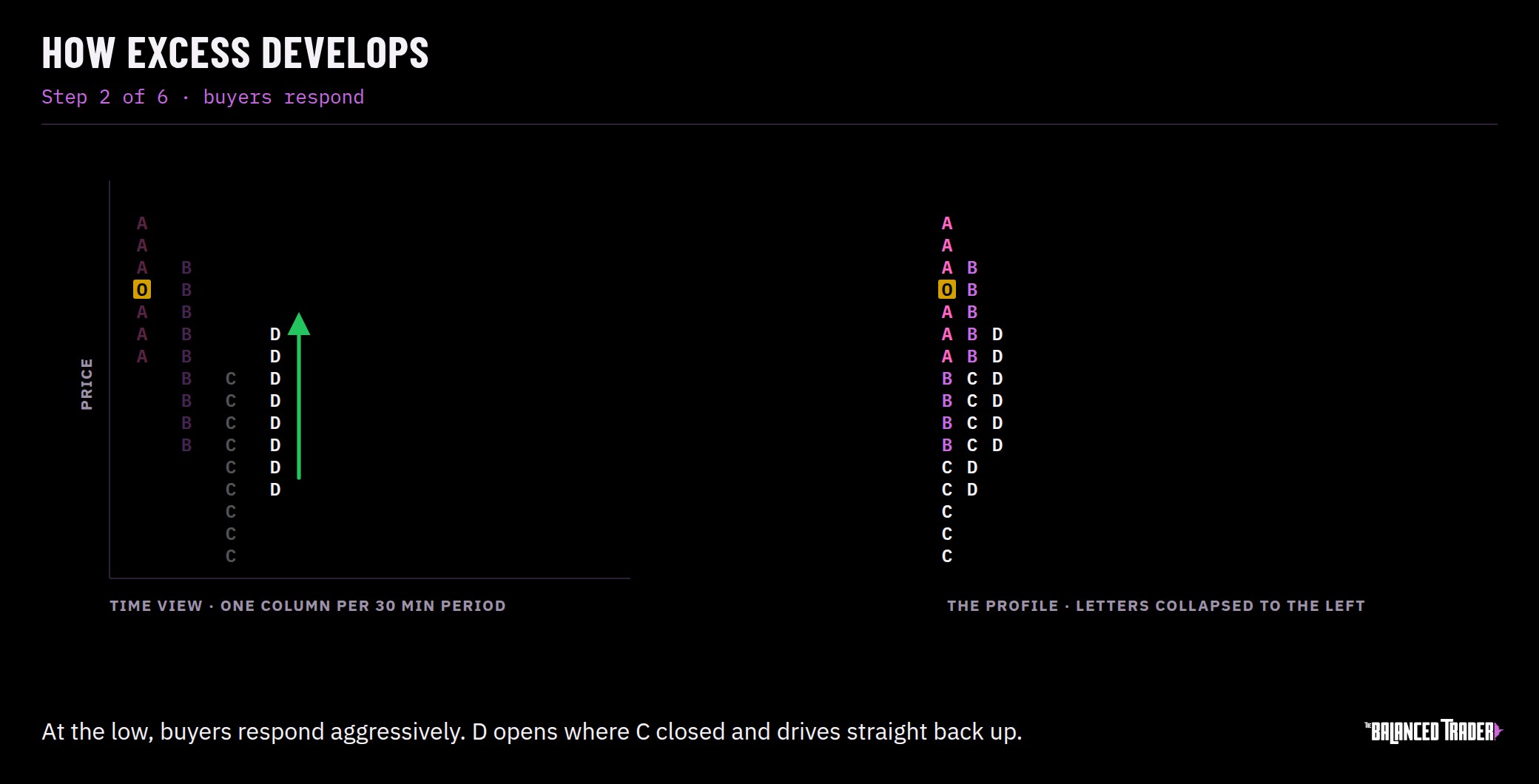
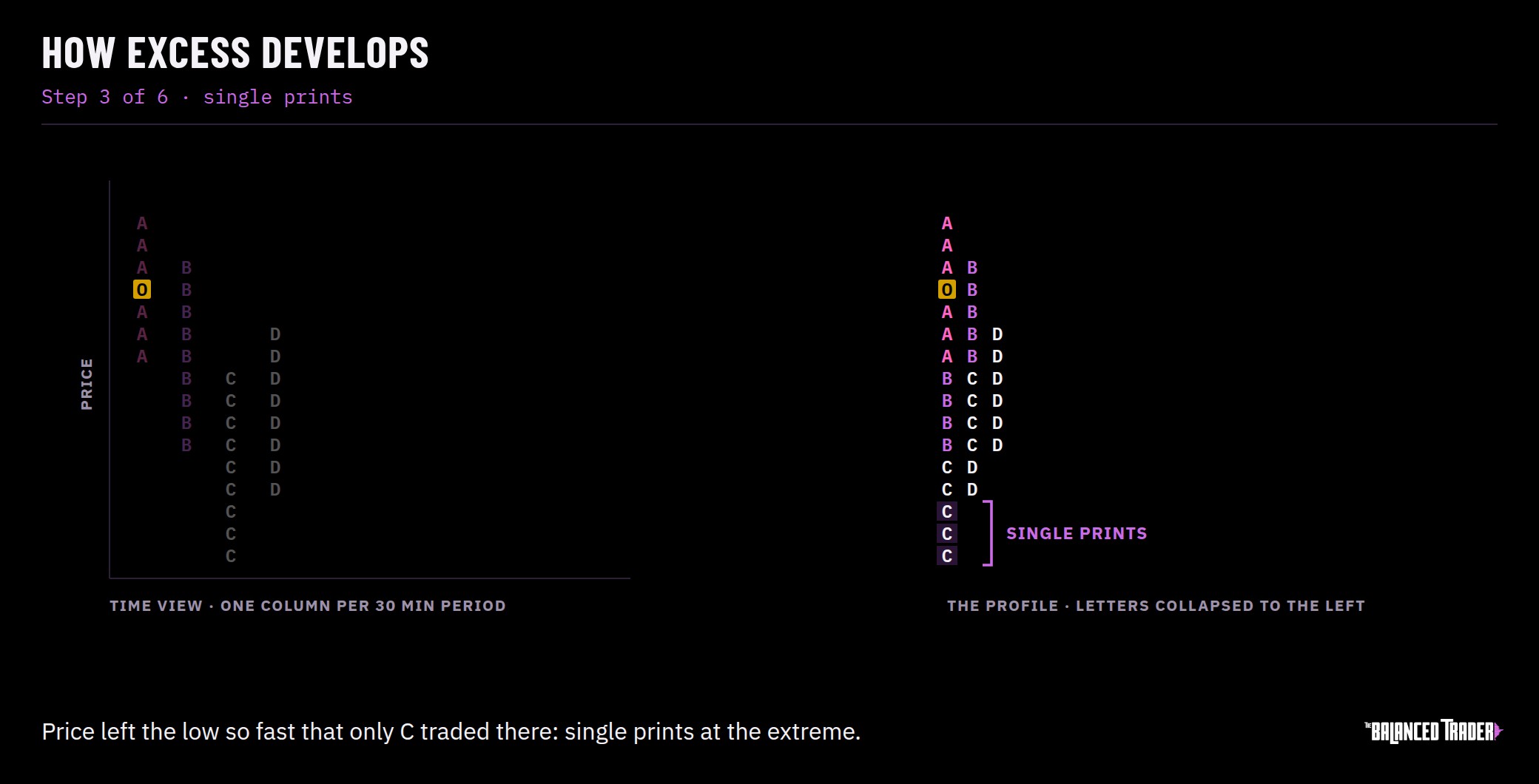
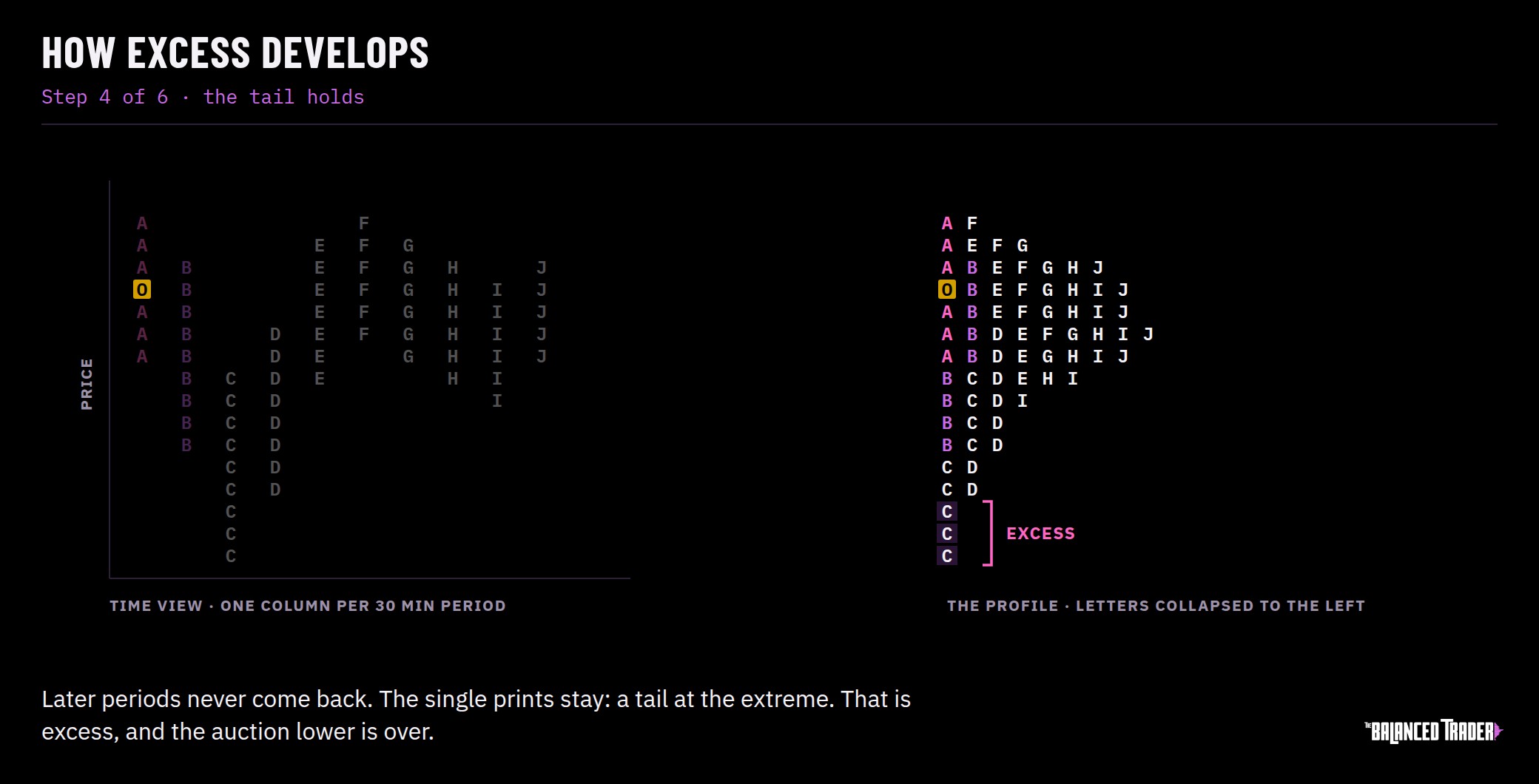
Play it as a video
How to trade it
Non-excess, continuationIn many cases this is the textbook market profile setup, and once it's recognised, an entry before the retest and continuation is the favoured strategy.
Non-excess, absorptionThere are two possibilities:
- The absorbing liquidity is eventually depleted, and the auction continues on and beyond. This setup can be brutal the longer a NonXS holds, as stops are often placed beyond an observed area.
- The liquidity remains resolute, and opposing forces trading into the non-excess area eventually get frustrated and reverse the auction.
LedgesThe more TPOs at a ledge, the bigger the opportunity.
Retain the informationKnowing that an auctioned area has shown a stubborn defence of a given level is important information that should be carried forward.
I'll come back to this post and add some images and examples. The opposite of NonXS is excess: check out how I use those setups.
Key takeaways
See it in the journal
Real sessions where this happened, written up on the day.
Get the journal in your inbox
The daily journal, the week reviews and the Weekly Ahead, by email. Subscribers get the pre-market update first.